Short answer: in the Willamette Valley, roof moss is a moisture and shade problem first and a cleaning problem second. Keep the roof surface drying (trim overhang, clear valleys, keep gutters draining) and treat the growth early with a low-pressure moss treatment — never a pressure washer — and most roofs stay clear on a one-to-two-year cycle.
We service roofs from McMinnville and Newberg down to Salem and out to the coast at Pacific City; the north-facing, fir-shaded slopes common across this region are where every prevention plan should start.
Why the Willamette Valley is a hotspot for roof moss
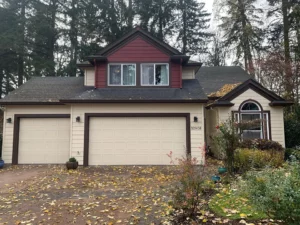
Homeowners in McMinnville, Salem, Yamhill, Tualatin, and nearby Oregon communities deal with a combination that moss favors: frequent moisture, shaded roof sections, mild temperatures, and organic debris from surrounding trees. North-facing slopes and areas beneath overhanging branches often stay damp longer than the rest of a roof.
A little green growth can look harmless from the ground, but established moss holds moisture against roofing materials. Over time, that persistent dampness can contribute to staining, displaced debris, blocked drainage paths, and premature wear. The safest response depends on the roofing material, its condition, and the extent of the growth.
This guide explains why moss grows, what warning signs to watch for, how low-pressure professional cleaning differs from high-pressure washing, and what homeowners can do to reduce future growth.
Why moss grows so quickly on Oregon roofs
Moss is a non-vascular plant. Instead of true roots, it uses small structures called rhizoids to anchor itself to a surface. It absorbs moisture directly from the surrounding environment, so a roof that stays damp and shaded provides favorable growing conditions.
Spores can arrive by wind or from nearby trees. Once pollen, needles, leaves, and other debris settle in roof valleys or behind roof features, they create places that retain moisture. Rough or aging surfaces may hold this material longer than smooth, well-drained surfaces.
Several property conditions can increase the likelihood of moss:
- Dense tree cover that limits direct sunlight
- North-facing or consistently shaded roof slopes
- Debris collecting in valleys, around skylights, or behind chimneys
- Gutters that overflow or drain poorly
- Roof sections with limited airflow
- Existing wear that creates more places for organic material to collect
Moss is not the only growth homeowners may notice. Algae often appears as dark streaks, while lichen can form crusty patches. Because these organisms respond differently to treatment, identification should come before cleaning.
How moss can affect roofing materials
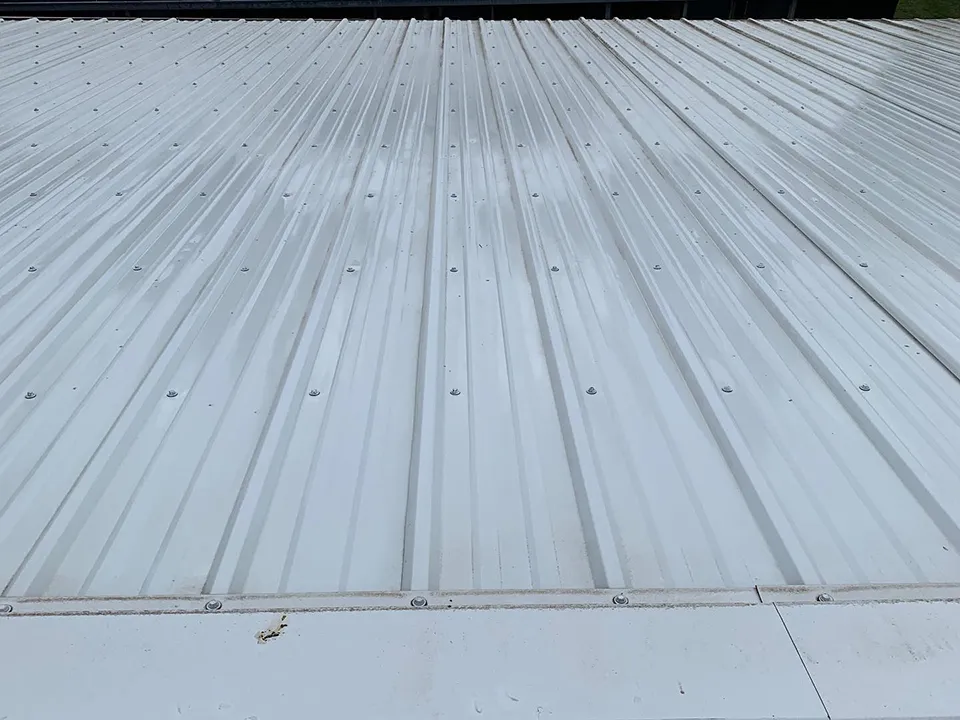
The effect of moss varies by roof type and condition. An asphalt shingle roof does not respond to cleaning in the same way as metal, tile, or cedar. That is why a qualified provider should inspect the material before choosing a process.
Moisture retention
A thick moss layer acts like a sponge. It can keep parts of the roof damp after surrounding surfaces have dried. Persistent moisture may accelerate wear in vulnerable areas and can make existing defects harder to see from the ground.
Lifted edges and trapped debris
As moss thickens, it can grow along shingle edges and into small gaps. Debris may collect around that growth, which can interfere with normal drainage. Raised or curled roofing should be evaluated carefully because cleaning cannot repair damaged materials.
Granule and surface wear
Asphalt shingles rely on their mineral surface for protection. Aggressive brushing, scraping, or high-pressure water can loosen granules. Tile coatings, cedar fibers, sealants, and painted metal surfaces can also be damaged by an unsuitable method.
Hidden maintenance problems
Moss may draw attention to other issues, including damaged flashing, loose roofing, clogged gutters, or overhanging branches. A cleaning visit is useful only when the provider also recognizes conditions that should be referred to a roofer, arborist, or gutter specialist.
Why high pressure is usually the wrong choice
Pressure washing is useful for durable hard surfaces when the equipment and technique match the material. A roof is different. Concentrated pressure can disturb shingle granules, force water beneath roofing, damage sealants, or mark softer materials.
Homeowners should be cautious of anyone proposing the same pressure setting for every surface. A roof-cleaning plan should account for the roof material, manufacturer guidance, age, pitch, drainage, nearby landscaping, and current damage.
Professional roof cleaning commonly uses a low-pressure application rather than relying on mechanical force. The goal is to treat organic growth without blasting the roofing surface. The exact solution, concentration, dwell time, runoff control, and rinse procedure should be selected for the roof and used according to product labels and applicable requirements.
Learn more about A+ Exterior Cleaning’s roof cleaning and moss removal service.
What to expect from a professional roof-cleaning visit
A responsible service should begin with an evaluation rather than immediate spraying. Ask the provider to explain the process and any limitations before work starts.
1. Property and roof assessment
The technician should identify the roof material, visible wear, moss severity, access points, drainage routes, and sensitive areas. Conditions that require roof repair should be documented and discussed before cleaning.
2. Site preparation
Preparation may include moving outdoor items, protecting or pre-wetting appropriate landscaping, checking downspouts, planning runoff management, and confirming that doors and windows are closed. Safety controls are especially important on steep, wet, or fragile roofs.
3. Material-appropriate treatment
The provider applies a process suited to the roofing material and the type of organic growth present. Low pressure does not mean one universal chemical recipe. The treatment should be adjusted to the site and explained to the homeowner.
4. Cleanup and final review
After treatment, the crew should check drainage areas, remove job-related debris, and review the result with the homeowner. Some dead growth may release gradually rather than disappearing immediately. The provider should set realistic expectations and explain whether a follow-up inspection is needed.
Practical moss-prevention steps
No roof stays maintenance-free forever, but homeowners can reduce the conditions that allow moss to return.
Manage shade carefully
Trim branches that touch or hang directly over the roof when it is safe and appropriate to do so. Tree work near a roof should be handled by a qualified professional. The objective is better light and airflow, not unnecessary removal of healthy trees.
Keep gutters and downspouts flowing
Clogged gutters do not cause every roof-moss problem, but poor drainage can keep roof edges and surrounding areas wetter. Schedule gutter cleaning according to tree cover, seasonal debris, and observed drainage performance.
Remove loose debris safely
Homeowners can monitor the roof from the ground and keep accessible drainage areas clear. Walking on a wet or moss-covered roof creates a serious fall risk and may damage roofing. If debris cannot be removed safely from the ground, hire a qualified professional.
Inspect after storms and seasonal changes
Look for fallen branches, overflowing gutters, lifted materials, and new patches of growth. Binoculars or ground-level photos can help with observation. A roofer should evaluate leaks, structural concerns, or damaged roofing.
Ask before installing metal strips
Zinc or copper systems may help inhibit growth on some roofs, but installation details, runoff effects, roof compatibility, and manufacturer guidance matter. Have a roofer or qualified specialist determine whether they are appropriate for the property.
A seasonal roof-care checklist
Autumn
- Clear leaves and needles from gutters and drainage areas
- Check for branches touching the roof
- Confirm downspouts discharge away from vulnerable areas
- Photograph areas where moss appears to be developing
Winter
- Observe drainage during rain from a safe location
- Watch for overflowing gutters or water entering where it should not
- Avoid walking on wet, icy, or moss-covered roofing
Spring
- Inspect for storm debris and visible lifting or wear
- Compare moss growth with autumn photos
- Schedule an assessment if growth is spreading or drainage is restricted
Summer
- Review shade and airflow around the roof
- Plan maintenance while conditions are more predictable
- Confirm that any cleaning method is suitable for the roof material
Frequently asked questions
How much does professional roof cleaning cost in Oregon?
Pricing depends on roof size, pitch, access, material, moss severity, safety requirements, and the treatment process. A responsible company should inspect the property or collect enough detail to provide a written estimate. Be cautious of a fixed price that ignores roof condition and access.
Can I remove moss with a broom or pressure washer?
Aggressive brushing, scraping, and high-pressure washing can damage roofing materials and create fall hazards. Ground-level observation and basic drainage maintenance are safer homeowner tasks. Established growth should be evaluated by a provider who can match the cleaning process to the roof.
How often should a roof be cleaned?
There is no universal schedule. Tree cover, orientation, roof material, drainage, and local moisture all affect regrowth. Inspect the roof periodically and after major storms. Clean when conditions and manufacturer guidance indicate it is needed, rather than applying a treatment automatically on a fixed calendar.
Will the moss disappear immediately?
Results depend on the process and the type and thickness of growth. Some treated moss may change color and release gradually with weathering. The provider should explain what will be visible on the day of service and what may change over the following weeks.
Is roof cleaning the same as roof repair?
No. Cleaning addresses dirt and organic growth; it does not repair damaged shingles, flashing, decking, or leaks. A reputable cleaning provider should identify obvious concerns and recommend evaluation by a qualified roofer when needed.
Plan the next step
If you see expanding green patches, dark streaks, trapped debris, or overflowing gutters, start with a property-specific assessment. A+ Exterior Cleaning serves homeowners across the Willamette Valley with roof cleaning, moss removal, gutter cleaning, and related exterior services.
Call (503) 830-8106 or request a free estimate to discuss the roof material, visible growth, access, and the appropriate next step for your home.
Need it done right? See our roof cleaning and moss removal in McMinnville, OR service page for pricing and scheduling, or read next: Preventing moss growth strategies to keep your roof moss free.