What Homeowners Should Know About Soft Washing Chemicals
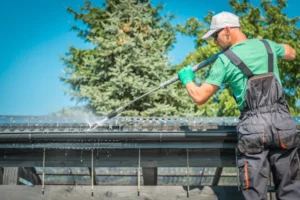
Keeping the exterior of your home pristine requires more than just a garden hose. Over time, algae, mold, mildew, and dirt build up on your siding, roof, and driveways, creating unsightly stains and potentially causing long-term damage. Many homeowners instinctively reach for a traditional pressure washer to blast away the grime. But high-pressure water can easily strip paint, damage delicate siding, and force water beneath your roof shingles.
Want it done safely? A+ offers soft-wash house washing in McMinnville, OR and the surrounding Willamette Valley — low pressure, biodegradable detergents, siding and paint protected.
This is exactly why soft washing has become the preferred method for treating delicate exterior surfaces. Instead of relying on brute force, soft washing uses a specialized blend of cleaning solutions applied at low pressure. It treats the root cause of the staining, neutralizing organic growth so your home stays cleaner for much longer.
Understanding the chemicals used in this process is essential for any responsible homeowner. You want a clean house, but you also want to ensure the safety of your family, your pets, and your carefully curated landscaping. A+ Exterior Cleaning highly recommends soft washing for delicate surfaces, and we believe in complete transparency about the solutions we use to protect and beautify your property.
The Science Behind Soft Washing
Traditional power washing relies entirely on the mechanical force of pressurized water. While this is highly effective for hard, porous surfaces like concrete driveways, it is overly aggressive for vinyl siding, stucco, and asphalt shingles.
Soft washing takes a completely different approach. It relies on chemistry rather than pressure. Technicians apply a carefully formulated cleaning solution using specialized pumps that deliver the liquid at a pressure roughly equivalent to a standard garden hose. This gentle application ensures that water is not forced behind your siding or underneath your roofing materials, which can lead to hidden water damage and internal mold growth.
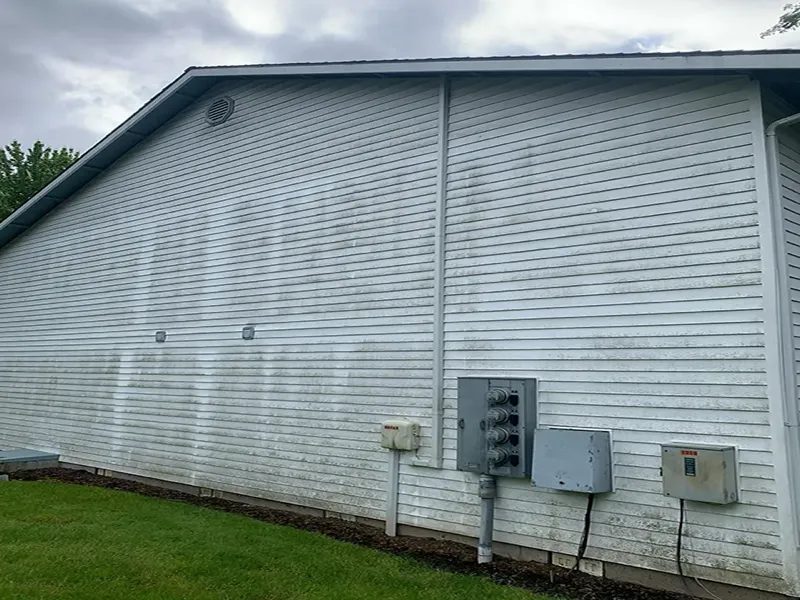
The cleaning solutions do the heavy lifting. They penetrate the porous surfaces of your home’s exterior to break down the cellular structure of algae, moss, and mildew. Because the chemicals kill the organic matter at its source, the results typically last much longer than traditional pressure washing. When you simply blast away the visible surface layer of algae with high pressure, the microscopic spores remain behind and quickly regrow. Soft washing sanitizes the surface, providing a lasting clean that preserves the structural integrity of your home.
Key Chemicals Used in Soft Washing
Homeowners frequently ask us what exactly goes into our soft washing tanks. A successful soft wash relies on a precise recipe, tailored to the specific needs of your home’s exterior. While the exact ratios change depending on the severity of the staining and the surface being cleaned, the primary ingredients remain consistent.
Sodium Hypochlorite
This is the active ingredient in most household bleaches, and it serves as the primary cleaning agent in soft washing. Sodium hypochlorite is incredibly effective at eradicating organic growth like mold, mildew, algae, and bacteria. It oxidizes the organic matter, breaking it down so it can be safely rinsed away. In soft wash cleaning, we use a specific, heavily diluted concentration of sodium hypochlorite. It is strong enough to sanitize your siding and roof, with concentration and use determined by label directions and material requirements.
Surfactants
Water and sodium hypochlorite alone will simply run down the side of your house before they have a chance to work. Surfactants, or surface-active agents, are added to the mix to solve this problem. They lower the surface tension of the liquid, allowing the cleaning solution to foam up and cling to vertical surfaces. This clinging action gives the sodium hypochlorite the necessary dwell time to penetrate and kill the organic growth. Surfactants also help loosen dirt, pollen, and spider webs so they can be easily rinsed away.
Neutralizers and Odor Masking Agents
Because sodium hypochlorite has a distinct odor, professional soft washing solutions often include masking agents to leave your home smelling fresh. Additionally, plant wash neutralizers are sometimes used at the end of the cleaning process to balance the pH of the soil around your home, ensuring the area returns to its natural state quickly.
Pure Water
Water is the delivery system for the entire process. It dilutes the active ingredients to the precise, safe levels required for residential cleaning and serves as the medium to gently rinse the deactivated grime away.
Safety First: Protecting Your Family and Pets
When you hear the word “chemicals,” it is completely natural to have concerns about safety. A+ Exterior Cleaning prioritizes the health and well-being of your family and pets above all else.
The soft washing industry has evolved significantly, and modern professionals use eco-friendly, biodegradable cleaning solutions. The sodium hypochlorite used in our mix naturally degrades into salt and water within a short period after application. It does not linger in the environment or leave harmful, toxic residues on your property.
During the soft washing process, our technicians follow strict safety protocols. We ask that family members and pets remain indoors while the solution is being applied and rinsed. This prevents any accidental exposure to the active cleaning agents. Once the cleaning is complete and the surfaces have been thoroughly rinsed and allowed to dry, people and pets should return to the area only after the provider’s product-specific rinsing, drying, and re-entry guidance has been met.
Our team is rigorously trained in the safe handling, mixing, and application of these solutions. We monitor the wind direction, adjust our spray patterns, and maintain complete control over the cleaning site to ensure the chemicals only go exactly where they are intended to go.
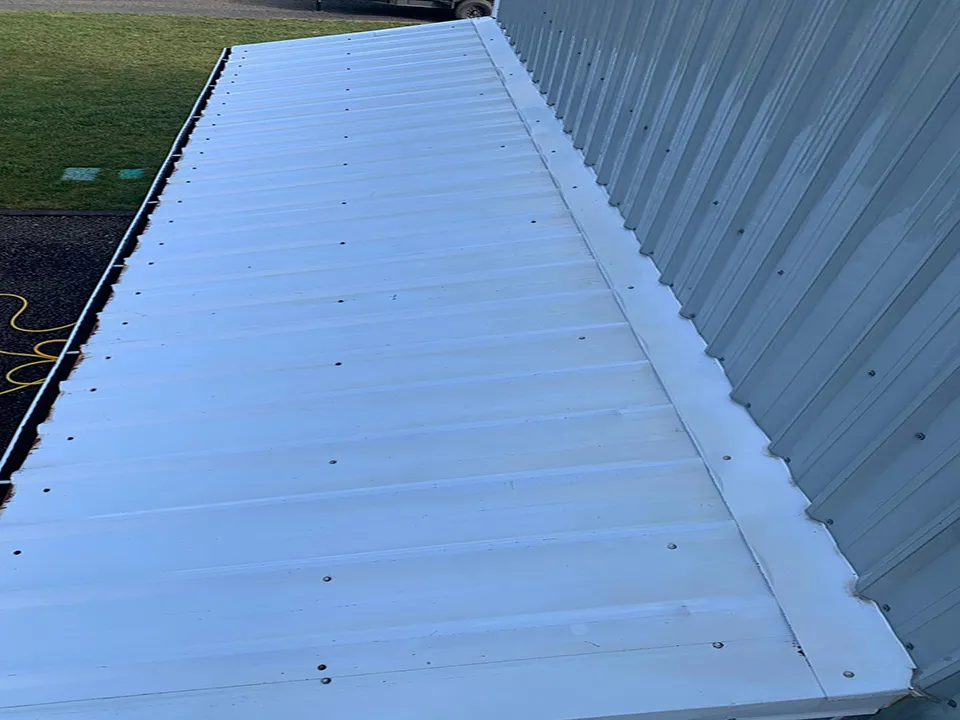
Soft Washing and Landscaping: A Delicate Balance
Your home’s exterior is only one part of your property’s curb appeal. The surrounding landscaping, flowers, shrubs, and trees are equally important. One of the most common questions we receive is how soft washing chemicals affect plant life.
Sodium hypochlorite and surfactants can be harmful to delicate foliage if applied directly and left to dry. However, a professional soft washing company takes extensive precautions to ensure your greenery remains vibrant and healthy.
Before we even begin mixing our cleaning solutions, our team thoroughly waters all the plants, grass, and shrubs surrounding your home. By saturating the plants with fresh water, we fill their cellular structure, making it incredibly difficult for them to absorb any stray cleaning solution.
During the soft washing process, a dedicated technician constantly rinses the landscaping with fresh water. If any overspray happens to drift onto a plant, it is immediately diluted and washed away before it can cause any harm. After the house is completely clean, we perform a final, comprehensive rinse of all the surrounding vegetation. We also apply plant-fortifying neutralizers to the soil if necessary, which counteracts any potential pH imbalance and provides nutrients to keep your garden thriving.
Common Misconceptions About Soft Washing Chemicals
The exterior cleaning industry is full of myths that can confuse homeowners trying to make the best decision for their property. Let’s clear up some of the most persistent misunderstandings regarding soft washing chemicals.
Myth 1: The Chemicals Are Highly Toxic and Bad for the Environment
As mentioned earlier, the primary active ingredient is a diluted form of sodium hypochlorite, which breaks down entirely into salt and water. The surfactants we use are biodegradable and designed to break down rapidly in the natural environment. When applied correctly by certified professionals, these solutions pose no long-term threat to the local ecosystem, your local water table, or your neighborhood.
Myth 2: Soft Washing Isn’t as Effective as Pressure Washing
Many people believe that if water isn’t hitting the house at 3,000 PSI, the house isn’t getting clean. This is fundamentally incorrect for delicate surfaces. High pressure only removes the surface layer of the algae. Soft wash kills the root system of the organic growth. The chemical reaction provides a much deeper, more thorough clean. Your home will actually stay cleaner for a longer period because the spores have been completely eradicated, not just relocated.
Myth 3: I Can Just Do It Myself with Store-Bought Bleach
While it might be tempting to mix up a batch of household bleach and dish soap in a pump sprayer, DIY soft washing rarely yields professional results and carries significant risks. Household bleach lacks the specialized surfactants needed to make the solution cling to your siding. More importantly, without the proper training and commercial-grade equipment, you risk applying the wrong concentration, potentially staining your siding, killing your plants, or exposing yourself to concentrated chemical fumes.
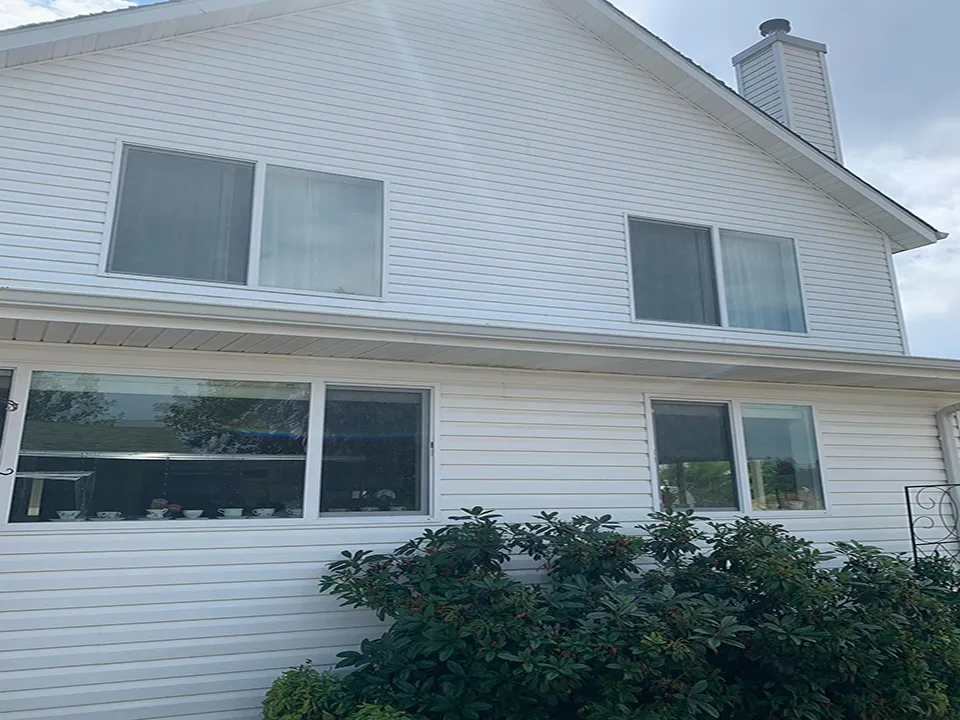
Why Choose A+ Exterior Cleaning for Your Soft Washing Needs
Protecting your biggest investment requires trusting the right professionals. A+ Exterior Cleaning has built a reputation for excellence by combining industry-leading techniques with a deep commitment to customer satisfaction.
Our technicians are fully trained, licensed, and insured. We understand the precise chemical mixtures required for different types of siding, roofing, and organic growth. We do not use a “one-size-fits-all” approach. Every home is evaluated individually, and our cleaning solutions are custom-mixed on-site to provide maximum cleaning power with maximum safety.
We utilize state-of-the-art, low-pressure delivery systems that gently apply our eco-friendly solutions. We stand behind our work, ensuring that every customer is completely thrilled with the transformation of their property. When you hire A+ Exterior Cleaning, you are getting peace of mind, knowing that your home, your landscaping, and your family are in expert hands.
Ready for a Cleaner, Safer Home Exterior?
Soft washing is undeniably the safest and most effective way to restore the beauty of your home’s exterior. By understanding the science and the chemicals involved, you can make an informed decision that protects your property from the damage caused by high-pressure washing.
The specialized blend of diluted sodium hypochlorite, clinging surfactants, and pure water works synergistically to eradicate mold, mildew, and algae at their source. Combined with our strict safety protocols and landscaping protection measures, A+ Exterior Cleaning guarantees a stunning, long-lasting result without any of the risks.
Don’t let q degrade your home’s curb appeal or structural integrity for another season. Contact A+ Exterior Cleaning today for a free, no-obligation consultation and quote. Let our experts show you exactly how our soft washing process can safely rejuvenate your property.
https://www.google.com/maps?cid=9581861370272832557