How to Identify Early Signs of Algae and Mold on Your Roof
Your roof does more than shelter you from rain and snow. It protects your home’s structure, keeps your family safe, and plays a major role in your property’s curb appeal. But when algae and mold take hold, they can compromise all of that.
These unwelcome guests don’t just create unsightly streaks and stains. Left unchecked, they can damage your roofing materials, drive up energy costs, and even pose health risks to your household. The good news? Catching algae and mold early makes all the difference.
At A+ Exterior Cleaning, we’ve seen firsthand how a little vigilance can save homeowners thousands in repairs. This guide will help you spot the early warning signs of algae and mold on your roof, understand what causes them, and learn how to prevent and treat these common problems before they escalate.
What Causes Algae and Mold Growth on Roofs?
Knowing why algae and mold appear on roofs helps you identify vulnerable areas and take preventive action. These organisms thrive in specific conditions many roofs unknowingly provide.
Environmental factors play a major role. High humidity from rainfall or dew creates ideal breeding grounds. Shaded sections of your roof (near trees, chimneys, etc.) stay damp longer, fostering microbial growth.
Organic debris acts like fertilizer. Leaves, twigs, and dirt accumulating in gutters and valleys provide essential nutrients for algae and mold to flourish.
Different roofing materials have varying susceptibility. Asphalt shingles, especially those with limestone filler, are particularly attractive to algae; limestone feeds it, causing the black streaks often seen on these roofs. Porous clay and concrete tiles can also harbor growth, while metal roofing is more resistant but not immune.
Poor ventilation compounds these issues by trapping moisture in attic spaces. This creates humid conditions that promote mold growth on the underside of roof decking.
Early Signs of Algae and Mold to Watch For
Catching algae and mold in their early stages requires knowing exactly what to look for. These organisms often start small but can spread rapidly under the right conditions.
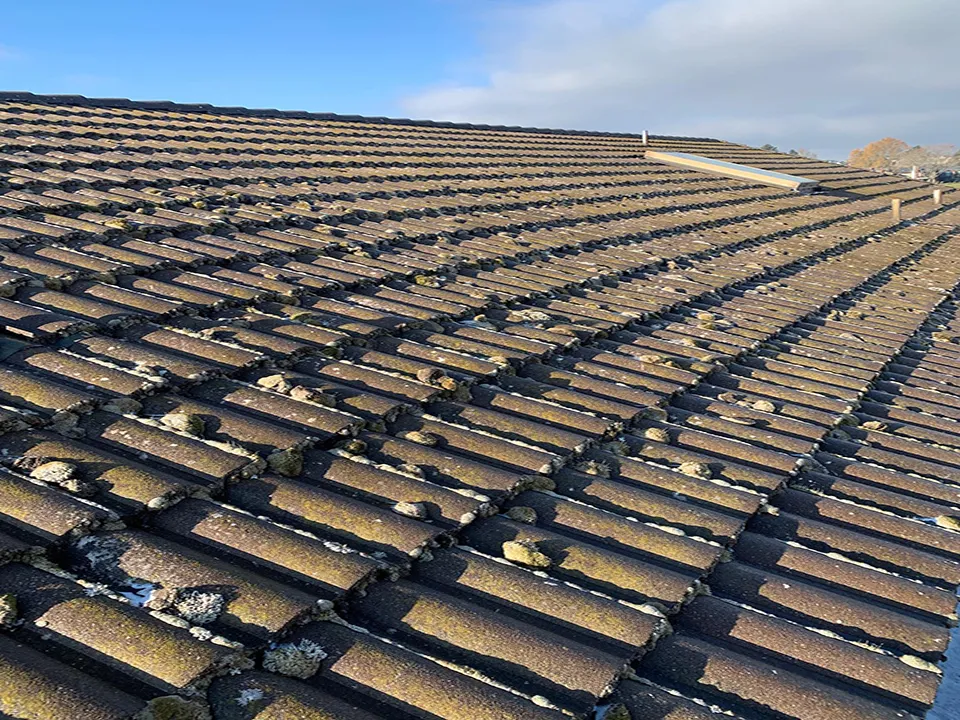
Black streaks running vertically down your roof are typically the first sign of algae growth. These streaks usually appear on the north-facing or most shaded areas of your roof first, where moisture lingers longest. The streaks may look like simple staining initially but will darken and spread over time.
Green patches indicate either algae or moss growth, both of which can damage roofing materials. These patches often start small—sometimes just a few inches across—but can expand significantly if left untreated. Look for any unusual coloration that differs from your roof’s normal appearance.
White or grayish spots may signal the early stages of mold growth. Unlike algae, which tends to create streaky patterns, mold often appears as circular or irregular patches. These spots might be subtle at first but become more pronounced as the colony grows.
Musty odors in your attic space can indicate mold growth on the underside of your roof decking. If you notice a persistent musty smell when you enter your attic, especially after rain, this could signal moisture problems and potential mold development.
Granule loss from asphalt shingles in localized areas often accompanies algae growth. Check your gutters for excessive granules, particularly if they’re concentrated rather than evenly distributed. This could indicate that algae are breaking down your shingles’ protective coating.
During routine inspections, A+ Exterior roof Cleaning professionals can identify these subtle early signs that homeowners might miss, potentially saving thousands in future repair costs.
The Risks of Ignoring Algae and Mold
Dismissing those black streaks or green patches as mere cosmetic issues can lead to serious consequences. The damage goes far beyond curb appeal, affecting your home’s structure, your family’s health, and your finances.
Structural damage begins when algae and mold break down roofing materials. Algae feed on the limestone in asphalt shingles, gradually weakening them and causing premature aging. Mold penetrates deeper, potentially reaching the roof decking and causing wood rot. This deterioration can compromise your roof’s ability to protect your home from the elements.
Shingle lifting and curling often results from algae growth underneath them. As these organisms expand, they can physically push shingles apart, creating gaps where water can enter. Once water penetrates these gaps, it can cause extensive damage to the underlying structure.
Health concerns arise when mold spores become airborne and enter your home’s ventilation system. Family members may experience increased allergies, respiratory issues, or asthma symptoms. Children and elderly residents are particularly vulnerable to these health effects.
Reduced energy efficiency occurs when dark algae streaks cover your roof. These dark areas absorb more heat, forcing your air conditioning system to work harder during summer months. This increased energy consumption can add hundreds of dollars to your annual utility bills.
Decreased home value becomes inevitable as the visual appearance deteriorates. Real estate professionals report that homes with visible roof staining can lose significant market value, and potential buyers may demand costly repairs before purchase.
Insurance complications may arise if damage results from neglected maintenance. Many insurance policies don’t cover damage that results from poor maintenance, leaving you responsible for expensive repairs that could have been prevented.
How to Inspect Your Roof for Algae and Mold
Regular roof inspections are key, but always prioritize safety. You can spot most early-stage issues from the ground with the right tools and approach.
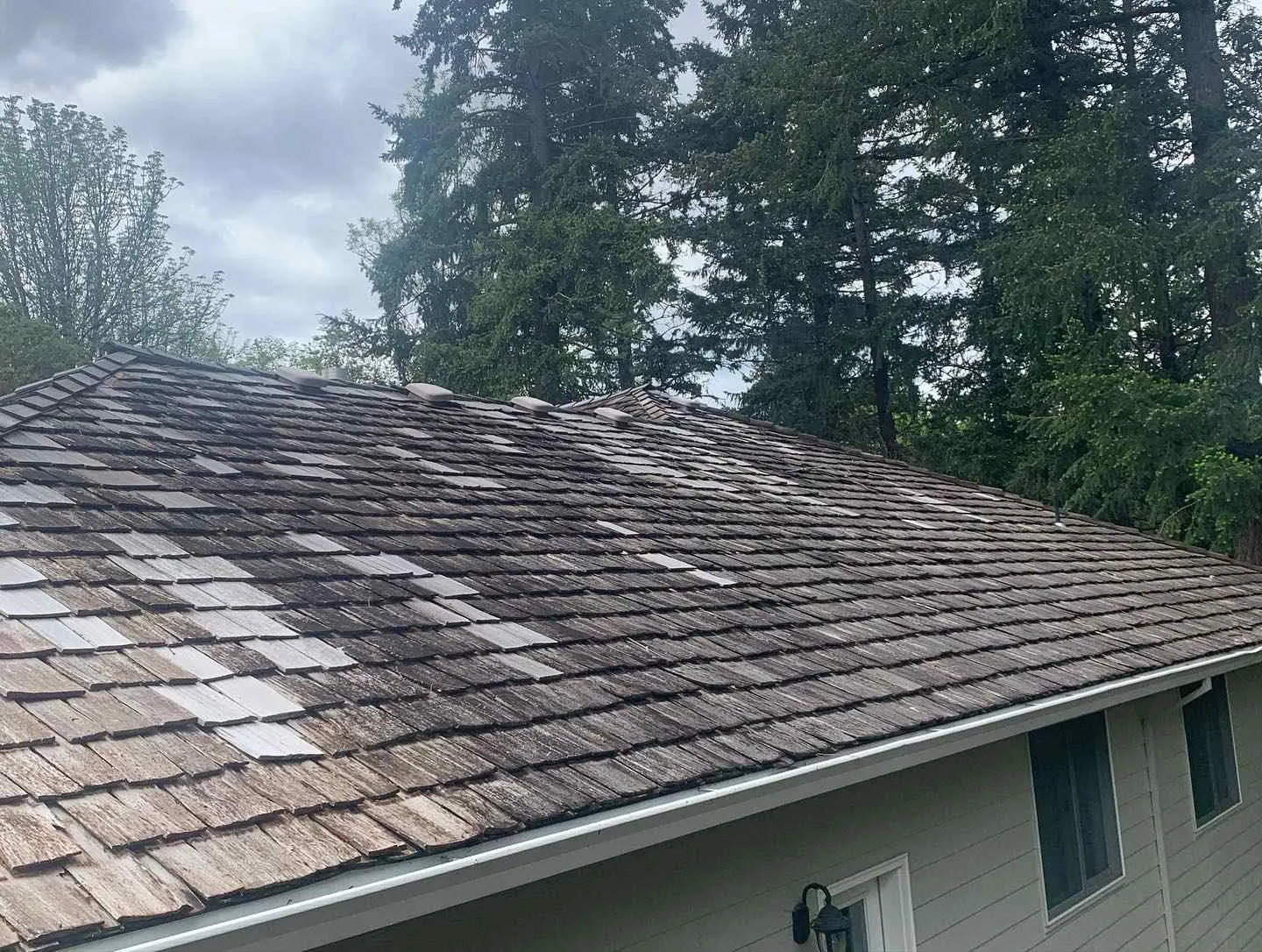
- Ground-level inspection: Start by using binoculars to examine your roof from various angles. Look for discoloration, strange patches, or areas with a different color. Pay close attention to north-facing slopes and shaded areas near trees.
- Check gutters and downspouts: Look for excessive granules or organic debris. Clogged gutters and standing water create a perfect environment for algae and mold. Dark stains near gutter lines often signal algae growth above.
- Interior signs: Don’t forget to check inside. In your attic, look for musty odors, water stains, or moisture. Discoloration on the underside of the roof decking can indicate mold.
- Timing matters: Inspect your roof during dry weather for clear visibility of stains, but also check after heavy rain to spot areas where water collects.
- Professional inspection: If you find potential problems or can’t safely inspect your entire roof, it’s time to call a professional. A+ Exterior Cleaning’s trained experts can safely access all areas, identify issues not visible from the ground, and recommend the right treatment.
- Documentation: Take photos during each inspection to track changes over time. This visual record helps you notice gradual growth that might otherwise be missed.
Preventing Algae and Mold Growth
Prevention is more cost-effective than treatment. Here are several strategies to reduce your roof’s susceptibility to algae and mold:
- Regular cleaning and maintenance: This is the foundation of prevention. Clear debris from gutters and roof surfaces at least twice a year and ensure proper drainage. Trim overhanging tree branches to increase sunlight and air circulation.
- Zinc or copper strips: Installing these near the roof ridge offers long-term protection. As rainwater flows over the metal, it picks up ions that naturally inhibit algae and mold. This is especially effective on asphalt shingle roofs.
- Improved ventilation: Proper attic ventilation helps control moisture. Make sure soffit and ridge vents are clear to reduce humidity and prevent the conditions that promote growth.
- Professional preventive treatments: For the most comprehensive protection, A+ Exterior Cleaning offers customized plans. We use eco-friendly solutions to create an environment hostile to algae and mold without damaging your roof.
- Gutter maintenance: Clogged gutters create ideal conditions for growth. Regular cleaning ensures water moves away from your roof efficiently.
Why Choose A+ Exterior Cleaning for Professional Help
When prevention isn’t enough, professional roof cleaner intervention is key. A+ Exterior Cleaning offers specialized expertise and equipment to protect your investment.
Eco-friendly cleaning solutions mean their soft-wash system uses biodegradable agents to eliminate algae and mold without harming plants, pets, or the environment.
Specialized equipment and techniques ensure thorough treatment without damage. Their low-pressure system protects shingles and prevents water damage often caused by high-pressure washing.
Experienced professionals identify different types of growth and choose appropriate treatments. They understand how various roofing materials respond to cleaning, ensuring optimal results.
Comprehensive service includes inspection, treatment, and prevention planning, helping you understand proper maintenance.
Customer satisfaction is their priority, reflected in positive reviews, repeat customers, transparent pricing, and detailed explanations for informed decisions.
Protect Your Roof Before It’s Too Late
Algae and mold won’t go away on their own. The longer you wait, the more damage they cause and the more expensive repairs become.
Take action today. Walk around your property and look for early warning signs. Schedule a professional inspection to catch problems you might miss from the ground. Invest in preventative maintenance to keep your roof in peak condition.
Ready to give your roof the care it deserves? Contact A+ Exterior Cleaning for a free inspection and discover how easy it is to maintain a clean, healthy roof. Your home will thank you.
https://www.google.com/maps?cid=9581861370272832557