Understanding the Difference Between Dirt, Mold, and Moss on Roof Surfaces
That dark patch creeping across your shingles might look like simple grime—but is it? What’s growing on your roof matters more than most homeowners realize. Misidentify the problem, and you risk choosing the wrong treatment, damaging your roof, or letting a serious issue spread unchecked.
Roofs accumulate a surprising variety of contaminants over time. Dirt and debris, mold and mildew, and moss each behave differently, cause different types of damage, and require different approaches to remove safely. The tricky part? They don’t always look that different at first glance.
This guide breaks down exactly how to tell them apart—what each one looks like, how it grows, the damage it causes, and what it takes to get rid of it for good. By the end, you’ll have a clear picture of dirt, mold, and moss on your roof and the best path forward to protect your home.
Dirt and Organic Debris: The Most Common Culprit
Dirt is the most straightforward of the three. Over time, dust, pollen, bird droppings, fallen leaves, and airborne particles accumulate on roof surfaces. In areas with heavy tree coverage or frequent rainfall, this buildup happens faster.
Appearance-wise, dirt tends to look like a general dullness or gray-brown discoloration across the roof. It doesn’t follow a specific pattern and won’t have the fuzzy or streaked texture that mold and moss produce. It’s more of an even coating that dulls the color of your shingles.
The good news? Dirt is the least structurally threatening of the three. It doesn’t anchor into your shingles or penetrate the material. However, leaving it to accumulate for years creates a fertile bed for mold and moss to take root. It can also trap moisture against the roof surface, which accelerates wear over time.
Removal is relatively straightforward compared to biological growth, but the method still matters. High-pressure washing—a common DIY choice—can strip away the protective granules on asphalt shingles, shortening their lifespan considerably.
Mold and Mildew on Roofs: The Hidden Health Hazard
Mold is where things get more serious. The most common form of roof mold isn’t what most people picture. Rather than the fuzzy green or black patches you might find inside a home, roof mold typically appears as dark streaks running down the slope of the roof.
These streaks are most often caused by Gloeocapsa magma, a type of algae (commonly grouped under the umbrella of roof mold due to its similar behavior and appearance). It starts as small dark spots, then spreads into long, dark stains that flow with rainfall patterns. Left untreated, it can cover an entire roof within a few years.
Mold and mildew thrive in humid, shaded environments. North-facing roof sections and areas shaded by nearby trees are particularly vulnerable. The dark coloration is actually a protective pigment the organism produces against UV light—which makes it stubborn and difficult to remove.
Why Roof Mold Is a Problem
Beyond aesthetics, mold on roof surfaces can compromise the shingles themselves. It feeds on the limestone filler in asphalt shingles, gradually breaking down the material over time. There are also health implications: mold spores can work their way into the home through ventilation, particularly in attic spaces with inadequate sealing.
Homeowners sometimes underestimate roof mold because it doesn’t always look dramatic. Those dark streaks can easily be mistaken for weathering or shadowing. Knowing the pattern is key—mold tends to follow the flow of water down the roof, while simple dirt does not.
Moss: The Structural Threat You Can See from the Street
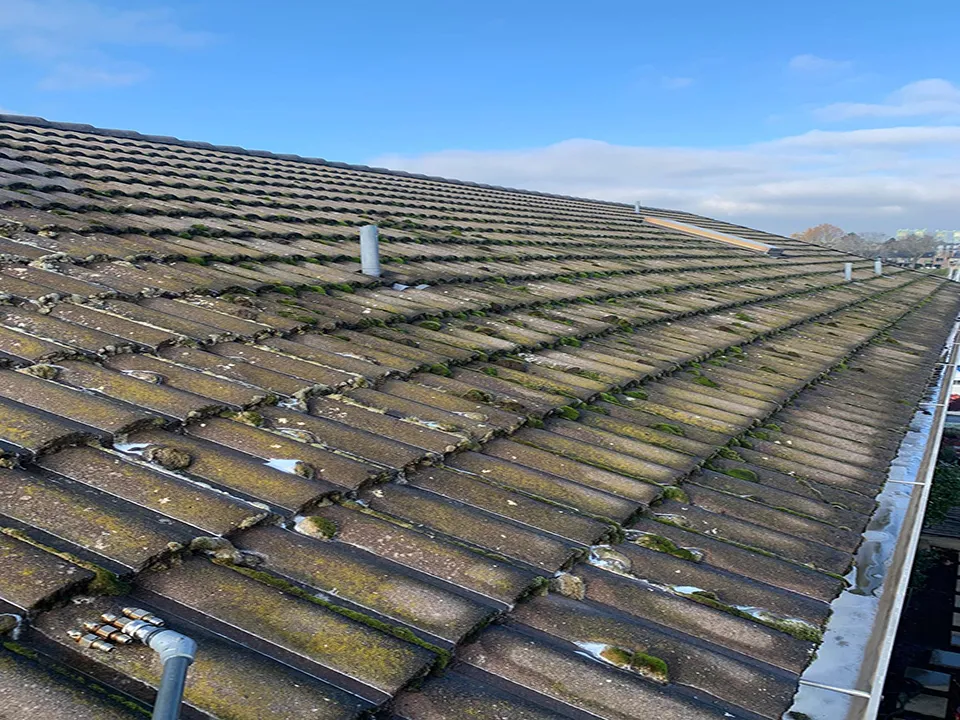
Moss is the most visually obvious of the three. It forms thick, green or dark green patches, typically starting in the shaded, moisture-rich areas of the roof before spreading outward. Unlike mold stains, moss has a genuine physical texture—it’s soft, dense, and clearly three-dimensional when viewed up close.
What makes moss particularly damaging is how it attaches itself to the roof. Moss uses tiny root-like structures called rhizoids to anchor into the surface of shingles. Over time, these penetrate the shingle material and create gaps where water can infiltrate.
The Long-Term Damage Moss Causes
Moisture retention is the primary concern. Moss acts like a sponge, holding water against the roof surface long after rain has stopped. This continuous moisture exposure leads to accelerated shingle deterioration, wood rot in the underlying deck, and in colder climates, freeze-thaw damage as trapped water expands and contracts.
Left untreated for several seasons, heavy moss growth can compromise the structural integrity of the roof itself. What starts as a cosmetic issue becomes a costly repair. This is why moss warrants prompt attention—not just a quick spray with a garden hose.
Comparing the Three: A Visual and Structural Guide
Here’s a simple way to tell them apart when you’re looking at your roof:
- Dirt and debris: Even, dull discoloration without a clear pattern. Gray, brown, or muted tones. No texture. Does not spread in streaks or clusters.
- Mold and algae: Dark streaks (often black or dark green) running down the slope of the roof, following rainfall patterns. No visible texture from a distance.
- Moss: Clearly visible green or dark patches with a raised, fuzzy texture. Most common on north-facing slopes or areas with significant shade.
When in doubt, look at the pattern and texture. Mold follows water flow. Moss clusters in shaded zones. Dirt is more uniform and widespread.
Why DIY Cleaning Can Backfire
It’s tempting to grab a pressure washer and blast the problem away. Unfortunately, this approach tends to create new problems while solving the old one—incompletely.
High-pressure washing strips the granules from asphalt shingles. Those granules aren’t just decorative; they protect the shingle from UV degradation and physical wear. Removing them shortens the effective life of the roof significantly. In some cases, DIY cleaning voids the manufacturer’s warranty on the shingles.
There’s also the safety dimension. Roofs are inherently dangerous environments. Wet surfaces, sloped angles, and the awkwardness of carrying equipment make falls a real and serious risk for untrained homeowners.
Beyond physical safety, using the wrong cleaning agents can damage gutters, kill surrounding vegetation, and leave residues that accelerate re-growth. Professional roof cleaning uses carefully calibrated solutions designed to treat biological growth without harming the roof or the surrounding landscape.
How A+ Exterior Cleaning Solves the Problem Safely
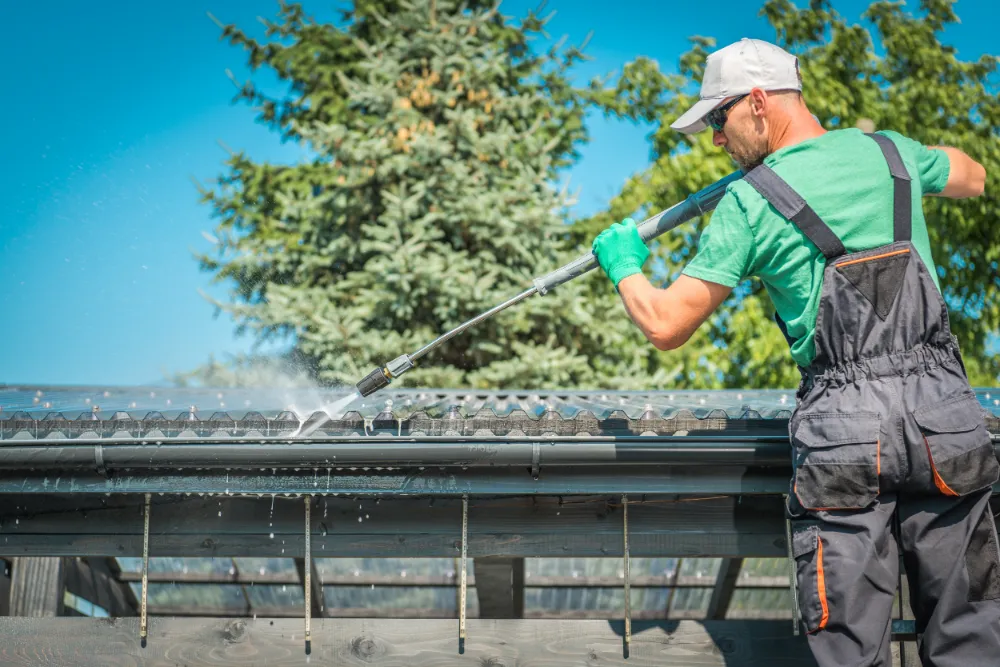
A+ Exterior Cleaning uses soft-washing techniques specifically designed for roof surfaces. Unlike pressure washing, soft washing relies on low-pressure water combined with professional-grade cleaning solutions to break down and eliminate mold, algae, moss, and debris at the source.
The process doesn’t just remove what’s visible—it treats the biological growth itself, killing the organisms and inhibiting regrowth. This means results last significantly longer than what a basic hose-down achieves.
The team at A+ Exterior Cleaning brings the expertise to correctly identify what’s growing on your roof, apply the right treatment for each situation, and protect your shingles throughout the process. No guesswork, no shortcuts, no unnecessary damage to one of your home’s most important protective systems.
Long-Term Prevention: Keeping Your Roof Clean
Once your roof is professionally cleaned, a few smart habits can significantly slow the return of growth:
- Trim overhanging branches: Overhanging branches provide shade and drop organic debris onto your roof, which are the ideal conditions for moss and mold to thrive. By trimming back trees and reducing shade, you can significantly minimize the risk of unwanted growth. Regular pruning also helps improve sunlight exposure, which naturally keeps your roof drier and healthier.
- Keep gutters clear: Clogged gutters can lead to serious moisture problems. When debris blocks the flow of water, it can back up and pool along the roof’s edge, creating a perfect environment for moss, algae, and other moisture-loving organisms. Cleaning your gutters regularly ensures proper drainage and helps maintain the overall condition of your roof.
- Install zinc or copper strips: A long-term, low-maintenance solution for preventing moss and algae growth is installing zinc or copper strips along your roof. When it rains, metal ions from these strips wash down the surface, creating an environment that moss and algae cannot survive in. This simple addition can make a big difference in keeping your roof clean and free of harmful growth without constant upkeep.
- Schedule regular inspections: Early detection is key to saving time and money when it comes to roof maintenance. By scheduling annual or biannual roof inspections, you can catch any signs of moss, mold, or algae growth before they become major problems. Addressing small issues early prevents costly repairs and ensures your roof remains in good condition for years to come.
- Improve attic ventilation: Proper attic ventilation plays a crucial role in maintaining a healthy roof. Poor ventilation often leads to excess moisture buildup inside the home, which can seep into the roof deck and contribute to mold or moss growth on the exterior. Installing vents or improving airflow in the attic helps keep the underside of the roof dry and reduces overall moisture levels, promoting a longer-lasting, healthier roof.
Protect Your Roof Before the Damage Adds Up
Dirt, mold, and moss each present different challenges—but they share one important trait: they all get worse the longer they’re left alone. Early identification and the right treatment approach can add years to the life of your roof and prevent repairs that run into thousands of dollars.
If you’re unsure what’s growing on your roof, or if it’s been more than a year since your last professional inspection, now is the right time to act. A+ Exterior Cleaning offers professional roof assessments and safe soft-washing treatments tailored to your roof type and the specific growth present.
Get in touch with A+ Exterior Cleaning today to schedule your inspection and protect your home from the top down.
https://www.google.com/maps?cid=9581861370272832557