How Weather Affects the Results of Pressure Washing and Roof Cleaning
Many homeowners mistakenly believe pressure washing and roof cleaning are straightforward DIY tasks: just spray down the surface, give it a quick scrub, rinse it off, and you’re finished. However, the reality is far more nuanced. The success and longevity of an exterior clean depend heavily on the weather conditions at the time of service. Factors like temperature, humidity levels, recent rainfall, and even the intensity of direct sunlight can dramatically alter the outcome. These elements influence how effectively cleaning solutions perform, how long it takes for surfaces to dry properly, and ultimately, whether you achieve a lasting, pristine result or simply waste your time and money.
This guide will provide a detailed breakdown of how different seasonal weather conditions can impact the effectiveness of your exterior cleaning projects. We’ll explore why scheduling your service at the right time is crucial for achieving a flawless finish and explain why partnering with a knowledgeable, local company like A+ Exterior Cleaning, which understands the intricacies of regional weather patterns, can make all the difference in protecting your investment.
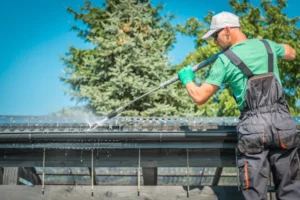
The Best Conditions for Pressure Washing Siding and Decks
Not all mild days are created equal. For pressure washing siding and decks, the ideal conditions sit somewhere between 50°F and 80°F, with low humidity and overcast skies. Here’s why each factor matters:
- Temperature: Cleaning solutions—whether detergent-based or chemical—are formulated to work within specific temperature ranges. Too cold, and the solution thickens, loses its effectiveness, and may not rinse cleanly. Too hot, and it evaporates before it has time to break down grime, algae, or mildew.
- Humidity: High humidity slows the drying process significantly. For wood decks in particular, moisture-saturated surfaces are more susceptible to re-growth of mold and mildew shortly after cleaning. Ideally, low humidity helps surfaces dry faster and discourages biological regrowth.
- Sunlight: Direct sun can cause detergent to dry on the surface before it gets rinsed off—leaving streaks or residue. Overcast conditions give the cleaning solution enough dwell time to do its job properly.
What About Windy Days?
Light wind is generally fine, but strong gusts create problems. Overspray becomes unpredictable, chemical solutions drift onto plants and landscaping, and water pressure becomes harder to control. For siding especially, wind can push water under panels, increasing the risk of moisture intrusion.
Roof Cleaning Dynamics: Temperature and Humidity Matter More Than You Think
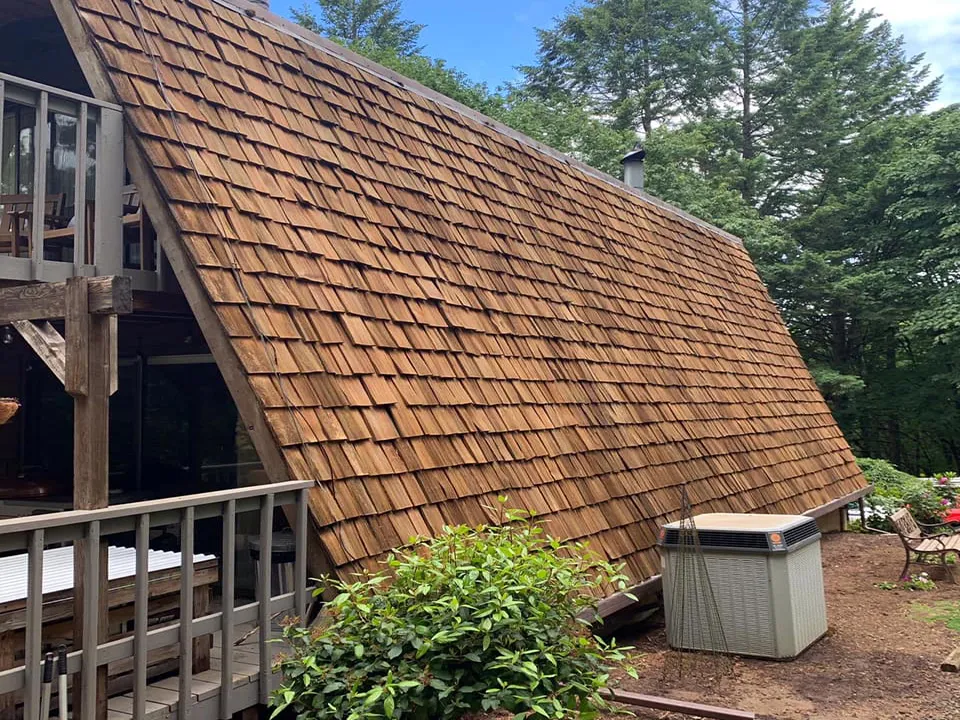
Roof cleaning—particularly soft washing, which uses low pressure and chemical solutions to treat algae, lichen, and moss—is highly sensitive to weather conditions.
Most soft wash treatments rely on sodium hypochlorite as a primary active ingredient. This chemical works by oxidizing biological growth, effectively killing it at the root. The catch? Its efficacy drops considerably in cold temperatures. Below 40°F, the oxidation process slows dramatically, meaning the solution may not fully neutralize algae or lichen before it rinses off.
Humidity’s Double-Edged Role
On a roof, humidity plays both a beneficial and problematic role. Some level of moisture helps cleaning agents spread and penetrate surface growth. But excessive humidity—common during summer months in humid climates—can dilute the solution and reduce contact time, especially on steep slopes where runoff is fast.
The sweet spot for roof cleaning is a mild, slightly overcast day with moderate humidity. Solutions have time to penetrate, temperatures keep chemical reactions active, and there’s no direct sun baking the product onto the shingles before it can be rinsed.
The Rain Factor: When to Proceed and When to Reschedule
Rain is the trickiest variable in exterior cleaning. Light rain after a completed job isn’t usually a problem—it can actually help rinse residual cleaning solution from surrounding plants and landscaping. But rain during or immediately before a cleaning session is a different story.
- Rain Before Cleaning: Attempting to clean a surface that is already saturated with rainwater is inefficient. The cleaning solution becomes diluted almost instantly, preventing it from properly adhering to the surface and breaking down contaminants. Furthermore, the technician has to contend with standing water, which can make the process more difficult and less effective. For these reasons, it’s almost always better to reschedule. Waiting for 24 to 48 hours of dry weather will ensure the surface is ready for treatment and lead to far superior results.
- Rain During Cleaning: If rain begins to fall mid-job, it poses a significant problem for the cleaning process. Most chemical solutions, especially those used in soft washing, require a specific “dwell time”—typically 15 to 20 minutes—to effectively break down organic growth like algae, mold, and mildew. Rain interrupts this critical window by diluting the solution and washing it away prematurely. This can result in an incomplete treatment, allowing biological contaminants to return much faster than they would otherwise.
- Heavy Rain in the Forecast: While it may seem counterintuitive, scheduling a roof treatment just before a forecasted heavy rain can sometimes be beneficial. The downpour can help thoroughly rinse away the cleaning solution and the now-dead organic matter from the roof. However, this is a risky strategy. If the rain arrives too soon—before the solution has had adequate time to work—it will neutralize the chemicals and render the treatment ineffective. It’s a gamble that depends heavily on precise timing.
Given these variables, the most reliable guideline is to schedule any exterior chemical cleaning for a time when you can expect at least 24 hours of dry weather afterward. This ensures the solution has ample time to work effectively, giving you the best and most long-lasting results.
Summer Heat: Managing Evaporation and Protecting Your Landscape
Summer seems like the obvious season for outdoor cleaning—and it can be—but high heat introduces specific challenges that require careful management.
The Evaporation Problem
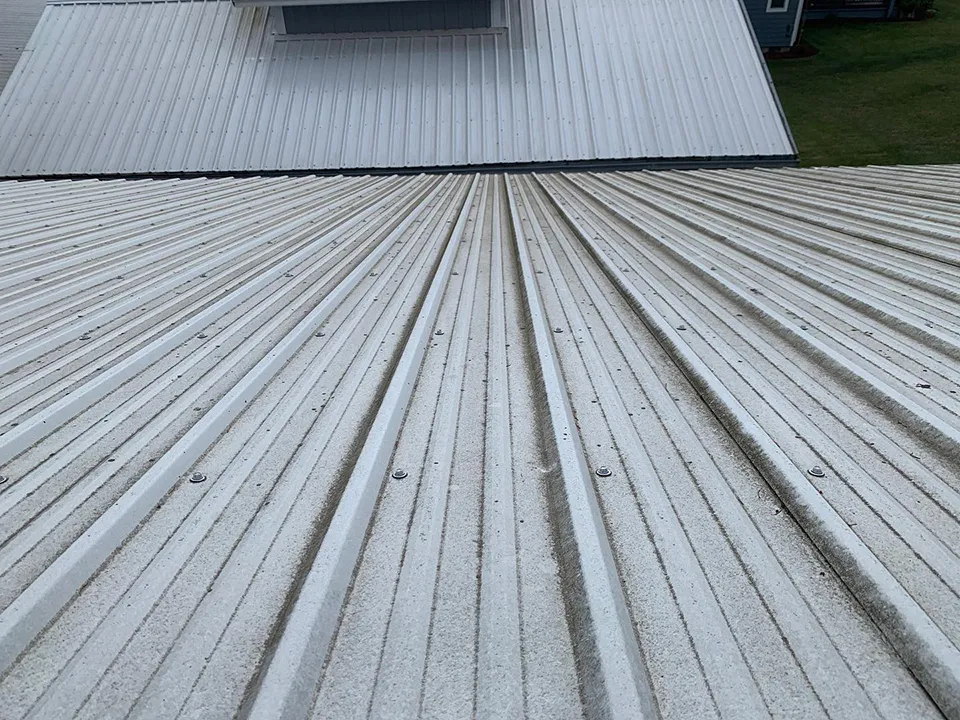
In temperatures above 85°F, cleaning solutions applied to hot surfaces can evaporate within minutes. This is especially problematic on dark-colored roofing materials or asphalt shingles that absorb heat. The solution never gets the dwell time it needs, and the result is an incomplete clean that may look fine initially but fails to address the biological root cause.
Professional crews working in summer heat often start early in the morning when surface temperatures are lower and adjust dilution ratios to compensate for faster evaporation.
Protecting Plants and Landscaping
Sodium hypochlorite and other cleaning agents can damage or kill vegetation if they’re not properly managed. In hot, dry weather, plants are already stressed—making them even more vulnerable to chemical exposure.
The standard practice is to pre-wet surrounding vegetation thoroughly before cleaning begins and rinse it again after. In extreme heat, more frequent rinsing is needed to prevent chemical absorption through dry plant tissue.
Winter Challenges: Freezing Temperatures and Equipment Risks
Cold weather cleaning is possible, but it comes with real risks—both to the quality of the clean and to the equipment involved.
Freezing Water in Equipment
Pressure washing equipment contains pumps, hoses, and fittings that can crack or burst when water freezes inside them. Even in temperatures just below freezing, residual water left in a pump overnight can cause significant damage. Professional operators know to drain and blow out equipment thoroughly after cold-weather jobs—but a single oversight can be costly.
Chemical Performance in the Cold
As mentioned above, sodium hypochlorite loses effectiveness at low temperatures. This isn’t just a minor inconvenience—it can mean an entire roof treatment fails to kill the underlying biological growth, leading to rapid regrowth and a callback within weeks.
For pressure washing, cold water itself is less effective at removing grease and biofilm than warm water. Some professional rigs include water heating capabilities, which helps compensate—but this adds time and cost to the job.
When Is Winter Cleaning Worth It?
There are situations where winter cleaning makes sense: preparing a home for sale, addressing a specific contamination issue, or completing a project before the ground freezes. But for routine maintenance, scheduling in spring or fall generally produces better, longer-lasting results.
Why Professional Expertise Matters: A+ Exterior Cleaning’s Approach
Local weather knowledge isn’t something you can Google. It’s built over years of working in a specific region, learning how microclimates, humidity patterns, and seasonal transitions affect cleaning outcomes on real homes.
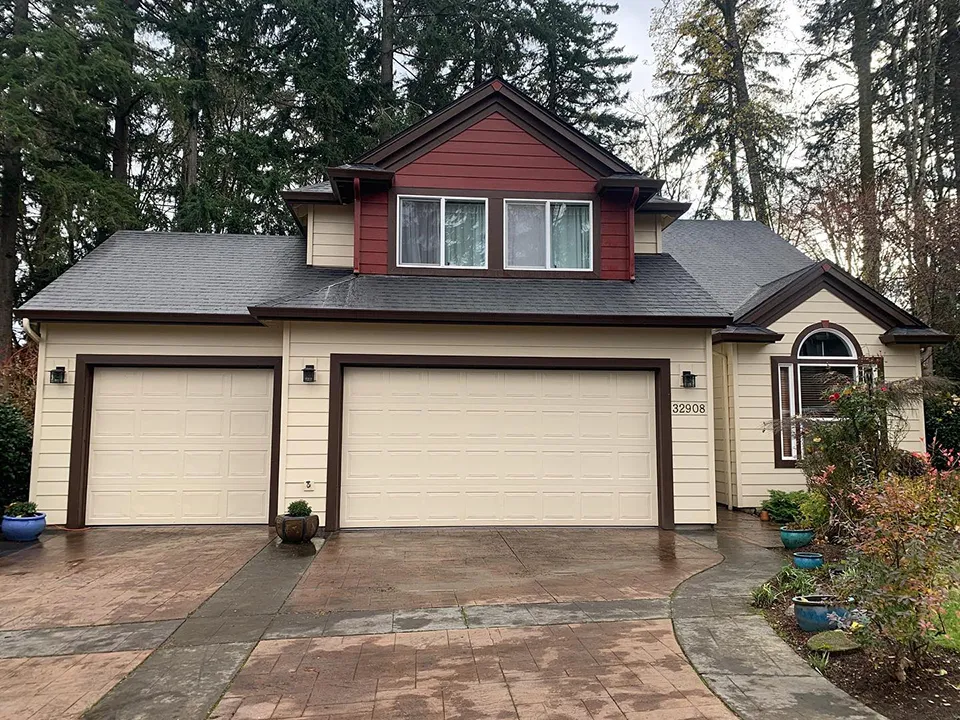
A+ Exterior Cleaning brings that expertise to every job. Rather than applying a one-size-fits-all approach, the team monitors forecasts, adjusts solution concentrations based on current conditions, and schedules jobs strategically to maximize results. When a job needs to be rescheduled due to weather, they communicate proactively—because a rescheduled job done right beats a rushed job done in the wrong conditions every time.
This kind of professional judgment protects your investment. Exterior surfaces—roofing, siding, wood decks—represent significant money. A cleaning done under poor conditions can strip protective coatings, fail to address biological growth at the root, or leave residue that attracts new grime faster. Done right, a professional clean can extend the life of these surfaces by years.
Schedule Smart for Long-Term Results
The best exterior cleaning results come from planning ahead—not just picking a warm day on the calendar, but choosing the right window of temperature, humidity, and dry weather for the specific surfaces being treated.
Spring and fall are generally the ideal seasons for most pressure washing and roof cleaning projects. Temperatures are moderate, humidity is manageable, and surfaces have had time to accumulate the kind of buildup that cleaning solutions can effectively treat.
If you’re ready to schedule your next exterior cleaning, reach out to A+ Exterior Cleaning. Their team will assess current and forecasted conditions to find the right window for your home—so the work gets done once, done well, and lasts.
https://www.google.com/maps?cid=9581861370272832557