The Role of Roof Cleaning in Maintaining Your Home’s Energy Efficiency
Most homeowners think about energy efficiency in terms of insulation, windows, or HVAC systems. The roof rarely enters the conversation—yet it’s the first line of defense against the sun’s heat, wind, and rain. Keep it clean, and it works as designed. Let it accumulate algae, moss, and debris, and you could be paying significantly more to heat and cool your home without even realizing why.
The connection between roof hygiene and home energy performance is well-established among building scientists and roofing professionals, but it tends to fly under the radar for everyday homeowners. This post breaks down exactly how biological growth and debris affect your roof’s thermal performance, what roof cleaning actually does for your energy bills, and how professional cleaning—done the right way—can protect both your wallet and your home for years to come.
Why Algae and Moss Are More Than an Eyesore
That dark streaking across asphalt shingles? It’s not just dirt. It’s typically Gloeocapsa magma, a type of cyanobacteria (commonly called roof algae) that feeds on the limestone filler used in many shingles. Moss is a separate issue—a thick, sponge-like plant that anchors itself between shingles and retains moisture.
Both create real thermal problems. Algae darkens the roof surface, which means it absorbs more solar radiation. Darker surfaces heat up faster and hold heat longer, driving up the temperature in your attic and, by extension, your cooling costs during summer. Studies from the Florida Solar Energy Center have found that roof surface temperature can spike significantly based on surface color and cleanliness alone.
Moss compounds the problem in a different way. By holding moisture against the shingles, it accelerates the degradation of roofing materials and adds weight that can lift shingle edges. This creates gaps where outside air can infiltrate—undermining your home’s thermal envelope and making your HVAC system work harder to maintain a stable indoor temperature.
The practical upshot: biological growth on your roof isn’t a cosmetic issue you can defer indefinitely. Every season it goes untreated, it’s quietly inflating your energy costs.
The Science of Cool Roofs—and What Gets in the Way
The roofing industry has spent decades developing materials specifically designed to reflect sunlight and emit absorbed heat back into the atmosphere. These are broadly categorized as “cool roofs,” and their performance hinges on two properties: solar reflectance (how much sunlight the surface bounces back) and thermal emittance (how efficiently it releases absorbed heat).
Shingles designed with cool roof technology can reduce peak roof surface temperatures considerably compared to standard materials. But that performance depends entirely on the surface remaining clean and clear of debris.
Leaf litter, dirt, pine needles, and biological growth all function as insulators on your roof—trapping heat and preventing the surface from doing its job. Even a thin layer of algae discoloration can measurably reduce a shingle’s reflective properties. For homeowners who invested in higher-efficiency roofing materials, this is particularly frustrating: the premium you paid for better thermal performance erodes with every year of neglected maintenance.
Clean shingles reflect more sunlight. Covered shingles absorb it. The math is straightforward.
Soft Washing vs. Pressure Washing: Why the Method Matters
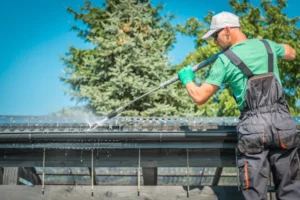
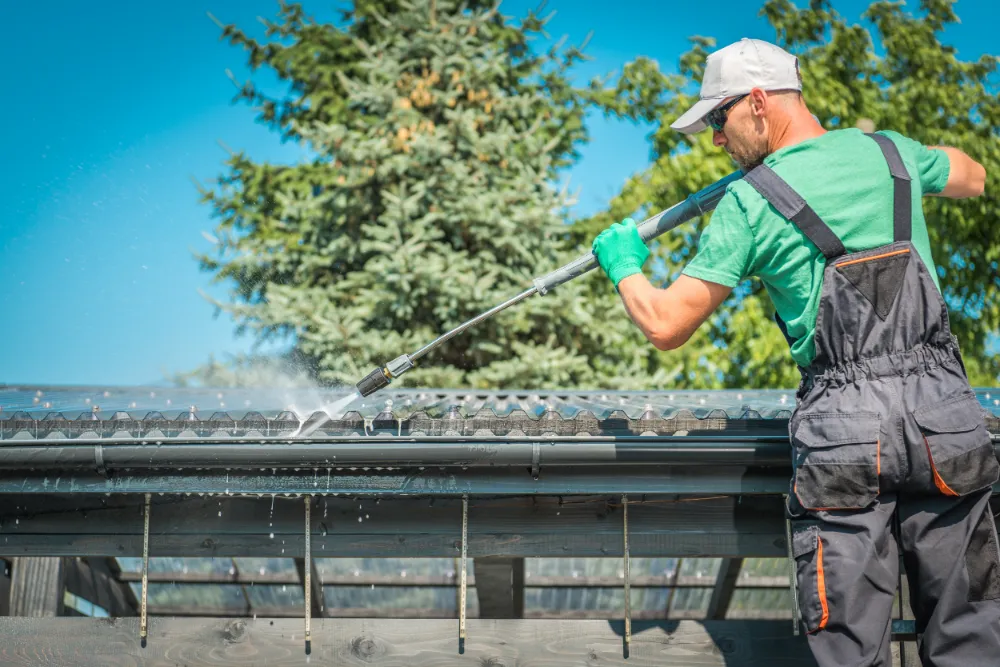
Once a homeowner decides to clean their roof, the question becomes: how? Pressure washing might seem like the logical choice—it’s powerful, fast, and widely available. For roof cleaning, though, it’s often the wrong tool.
High-pressure water jets can strip the granules from asphalt shingles. Those granules aren’t just decorative—they protect the underlying asphalt from UV degradation and contribute directly to the shingle’s reflective properties. Blast them away, and you’ve accelerated the aging process while simultaneously reducing the energy efficiency benefits you were hoping to restore.
Soft washing takes a different approach. It uses low-pressure water combined with specially formulated cleaning solutions to kill algae, moss, and lichen at the root, then rinse them away without damaging the shingle surface. The results last longer than pressure washing because the biological growth is actually eliminated rather than just temporarily dislodged.
Here’s why this distinction matters for energy efficiency:
- Preserves granule coverage, which maintains the shingle’s reflective capacity
- Eliminates biological growth at the source, preventing faster regrowth
- Avoids forcing water under shingles, which can compromise the roof’s weather barrier and thermal seal
- Extends shingle lifespan, delaying the need for full replacement
For homeowners focused on the long-term performance of their roof, soft washing isn’t just the safer option—it’s the smarter one.

How A+ Exterior Cleaning Approaches Roof Maintenance
Not all exterior cleaning companies treat roofs the same way. A+ Exterior Cleaning has built its approach around the specific demands of roofing materials and the long-term interests of homeowners—not just surface-level results.
Their roof cleaning process uses low-pressure soft washing techniques paired with professional-grade biodegradable solutions that target algae, moss, lichen, and mildew without compromising shingle integrity. The goal isn’t just a clean-looking roof; it’s a roof that performs the way it was designed to—reflecting heat, protecting the home’s interior, and holding up through seasonal extremes.
A+ Exterior Cleaning also understands that roof cleaning is part of a broader home maintenance picture. A cleaner roof means better thermal performance, fewer moisture-related repairs, and a longer interval before replacement becomes necessary. Their team takes the time to assess each roof individually, accounting for the type of shingles, the extent of biological growth, and the surrounding environment (heavily wooded areas, for instance, require different maintenance planning than open suburban lots).
For homeowners who want professional results without the risk of DIY pressure washing damage, A+ Exterior Cleaning offers a reliable, evidence-based solution.
The Long-Term Financial Case for Roof Cleaning
Energy efficiency improvements often get evaluated on upfront cost alone, which undersells their actual value. Roof cleaning is a good example. The cost of a professional soft wash is modest compared to the cumulative financial benefits it generates over time.
Lower utility bills are the most immediate benefit. A roof that reflects heat effectively reduces the load on your air conditioning system during summer. Even modest reductions in cooling demand add up across a full season—and across multiple years.
Extended roof lifespan is the larger financial story. Algae and moss degrade shingles over time. Moss, in particular, can cause shingles to crack and curl as it expands and contracts with moisture. A roof that would otherwise need replacement in 15 years might last 20 or more with consistent maintenance. Given that a full roof replacement can cost tens of thousands of dollars, the return on investment from regular cleaning is substantial.
Preserved warranty coverage is another factor worth noting. Many roofing manufacturers include maintenance requirements in their warranty terms. Neglecting to clean biological growth can, in some cases, void warranty protections that would otherwise cover premature shingle failure.
Regular cleaning isn’t just maintenance—it’s an investment with measurable returns.

Seasonal Maintenance Tips to Protect Your Home’s Energy Envelope
Professional cleaning is the most effective intervention, but there are practical steps homeowners can take throughout the year to support their roof’s thermal performance:
- Clear gutters each spring and fall. Clogged gutters cause water to back up under shingles, promoting moisture damage and biological growth near the roofline.
- Trim overhanging branches. Shade encourages moss growth, and falling leaves and debris accelerate the buildup that blocks heat reflection. Keeping branches trimmed back reduces both risks.
- Inspect after major storms. Wind and hail can shift shingles or create gaps that compromise both weather resistance and insulation. Catching these issues early prevents larger problems.
- Check attic ventilation annually. Even a clean roof performs poorly if the attic isn’t properly ventilated. Good airflow reduces heat buildup in summer and moisture accumulation in winter.
- Schedule professional cleaning every 2–3 years. The frequency depends on your local climate and the tree coverage around your home. Properties in humid, wooded environments typically need more frequent attention.
These habits won’t replace professional cleaning, but they extend the time between treatments and help your roof maintain its efficiency between service visits.
Start With a Professional Inspection
Your roof does more for your home’s energy performance than most people realize—and its condition deteriorates gradually enough that the decline is easy to miss until the utility bills tell a different story.
Keeping your roof clean is one of the most cost-effective steps you can take to improve your home’s thermal efficiency, extend the life of your roofing materials, and avoid expensive repairs down the line. The savings compound over time. The damage from neglect does too.
If your roof has visible algae streaking, moss patches, or accumulated debris, now is a good time to act. Contact A+ Exterior Cleaning to schedule a professional roof inspection and soft wash service—and start getting the full performance out of the roof you already have.
https://www.google.com/maps?cid=9581861370272832557